

Search
Press⌘K (Ctrl+K on Windows) to open search. The search field uses the placeholder Search Runway and returns results in Pages, Drivers, and Databases. Use the arrow keys to select a result, then press Enter to jump to it.
Default sidebar structure
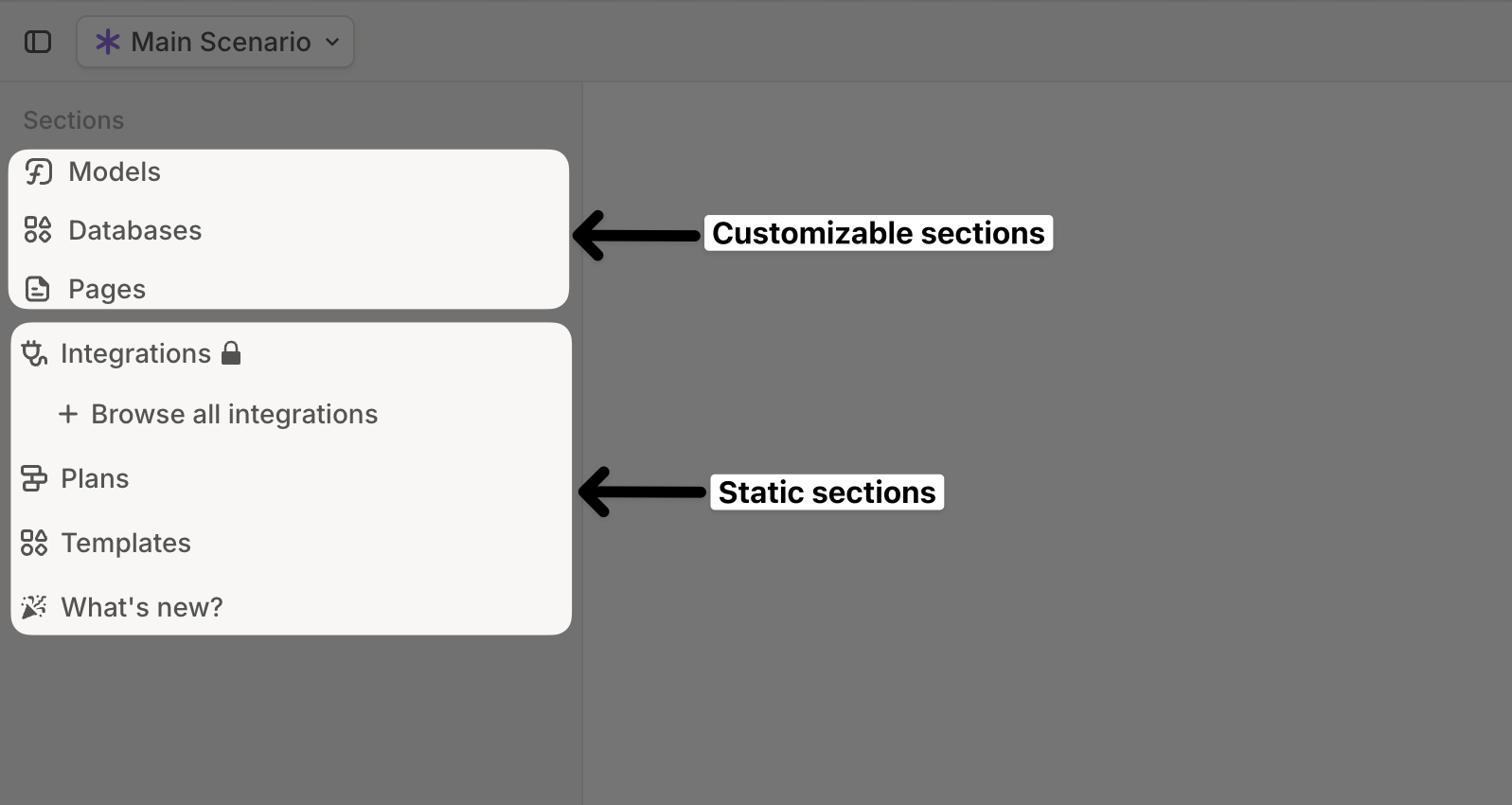
When you first start using Runway, the sidebar includes:- Three customizable sections: Models, Databases, Pages. You can rename, reorder, or delete these sections.
-
Static items such as Integrations, Plans, Templates, Unlisted Drivers, and What’s new?.
Sections for better organization
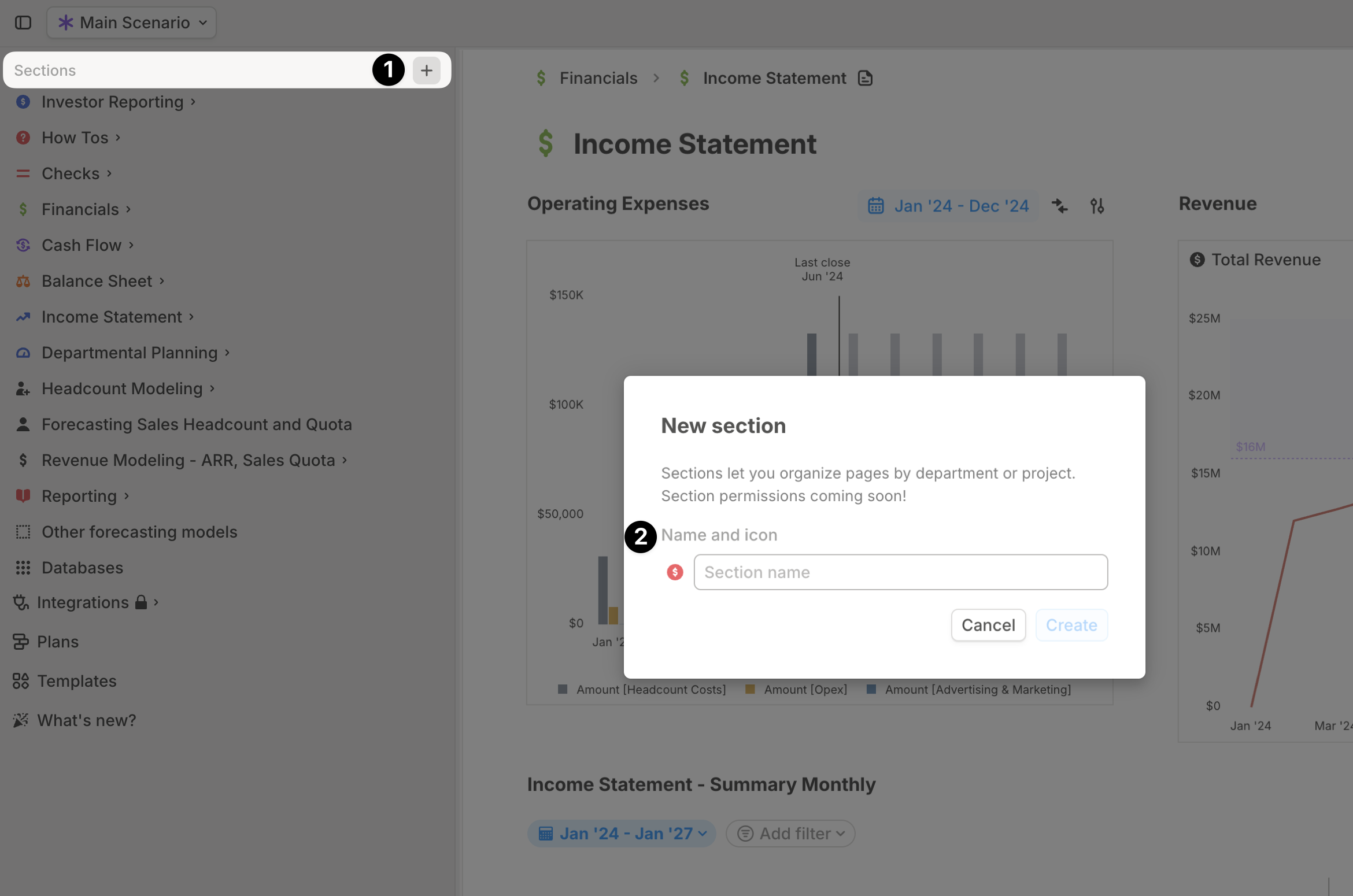
We recommend structuring the sidebar with sections to group related models, databases, and pages. For example, you might have:- A section for department pages
- Another for P&L reports at different levels of granularity
- A section for executive reporting
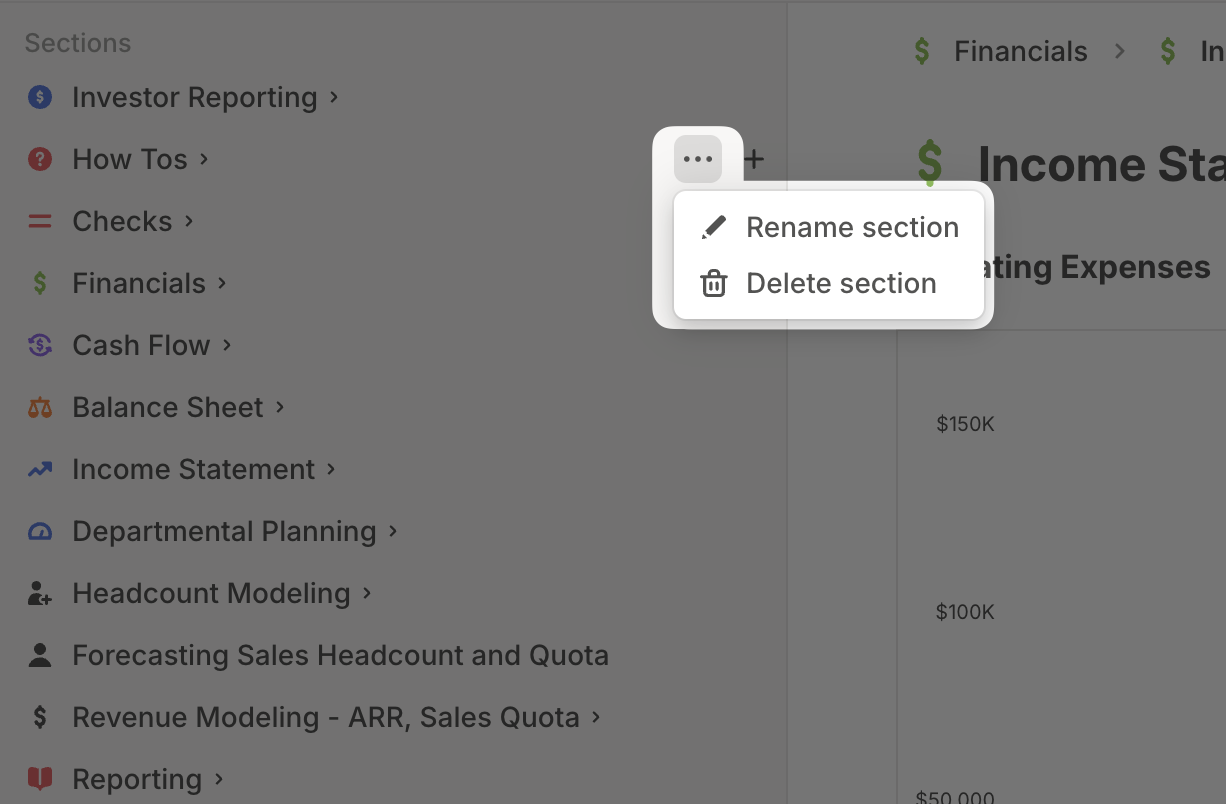
Cmd+Click or Shift+Click on any section in the sidebar, similar to Excel’s hide / show group behavior.
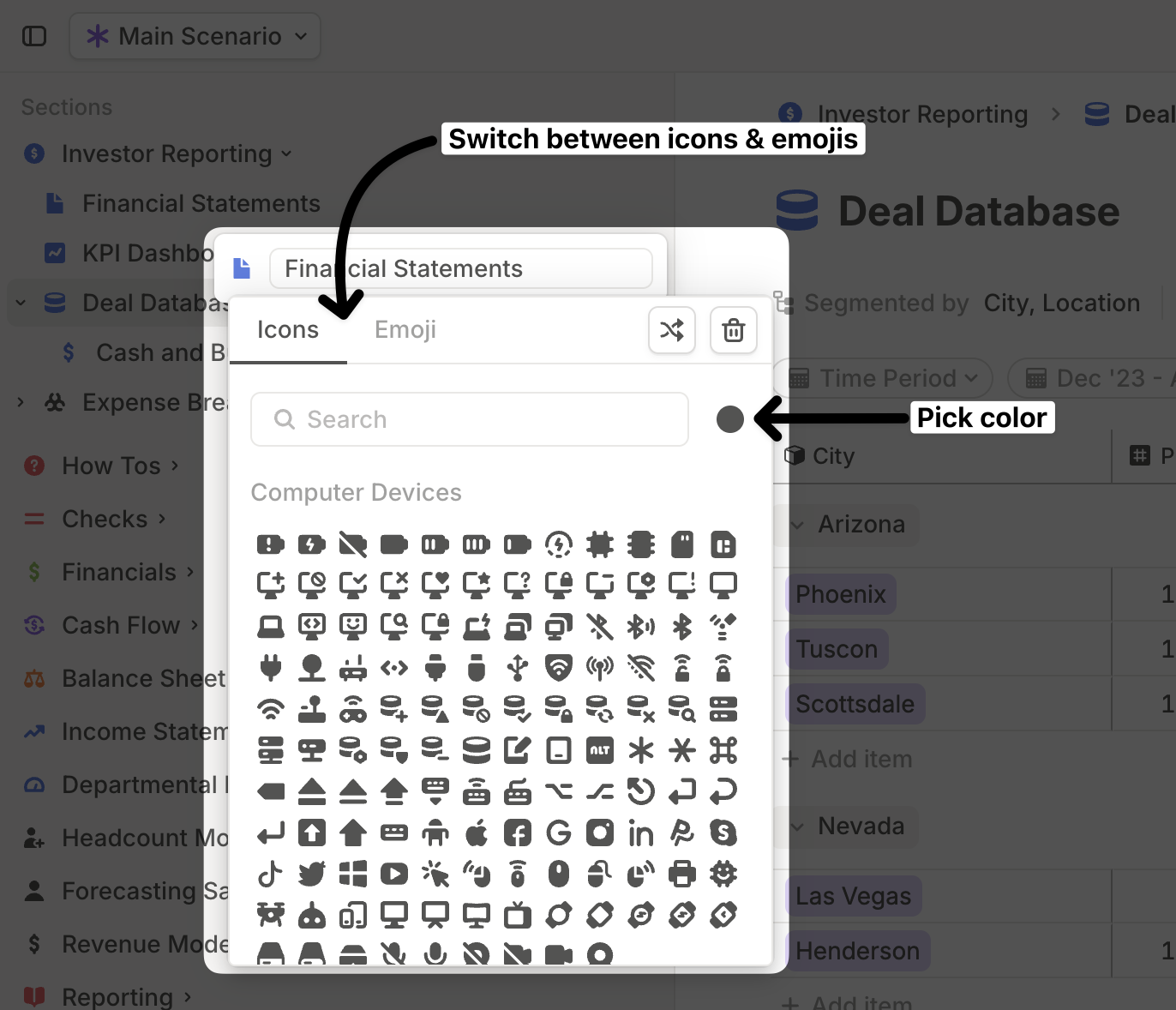
Icons for easier scanning
Every section, model, database, or page in Runway can have an emoji or icon to make it easier to recognize at a glance.- Runway offers 1,000+ icons in nine colors.
- Emojis also support skin tone variations.
Integrations
Use Integrations to open connected data sources or browse new ones. Choose Browse all integrations from the sidebar when you want to see the live in-app directory.Templates
Use Templates to find reusable page templates that can be added to Runway when they are available to your workspace.Unlisted Drivers
Drivers that are not on any page live in Unlisted Drivers. This is where you can recover drivers that were removed from a page but not deleted. For the difference between removing and deleting drivers, see Duplicating, removing & deleting.What’s new?
Use What’s new? to open Runway product updates.Activity history
Click the clock icon labeled History, then open the Activity pane to review recent changes. Activity history groups changes by user and includes timestamps. Use Exclude updates from Runway when you want to hide system-generated updates from the list. From a change’s overflow menu, use Save as locked scenario to snapshot the model at that point. See Scenarios for how locked scenarios work.FAQ
Where do removed drivers go?
Where do removed drivers go?
Drivers that are removed from a page but not deleted appear in Unlisted Drivers.
Is search a command runner?
Is search a command runner?
No. Search is for navigation. It helps you jump to pages, drivers, and databases.
Can I organize pages into custom sections?
Can I organize pages into custom sections?
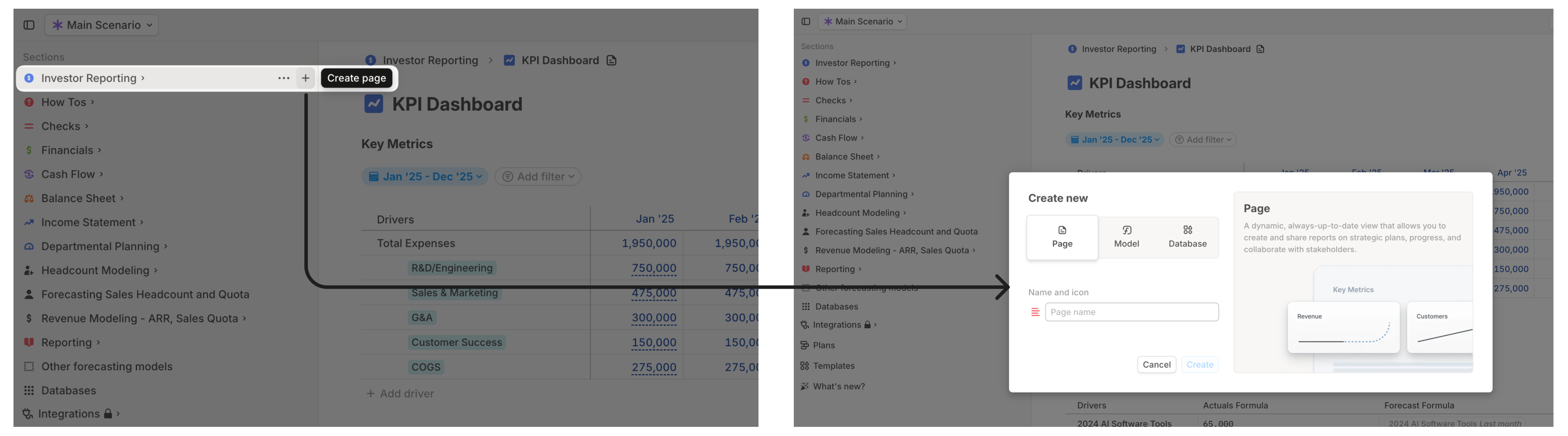
Yes. Create sections from the sidebar, then drag pages, models, and databases into them.